COSMOLOGICAL FLOW
Bruno Contenotte & Renato Volpini
OPENING
March 17, 2026 – 5.30 to 8 PM
March 18 – July 24, 2026
Galleria Allegra Ravizza is pleased to present the exhibition “Cosmological Flow”, a linguistic investigation set within the cosmic science-fiction context of Bruno Contenotte and Renato Volpini, accompanied by two works by Nanda Vigo— a dear friend of the latter—opening on Tuesday, March 17 at the Lugano venue in Piazza Cioccaro 11 (2nd floor).
Unique in their kind and united by marked inventiveness and fervent creativity, Bruno Contenotte (1922–1992) and Renato Volpini (1934–2017) engaged dynamically and vividly with the contemporary artistic languages of their time and with the use of new materials, surpassing traditional artistic techniques in favor of expressive, dialectical, and technological experimentation.
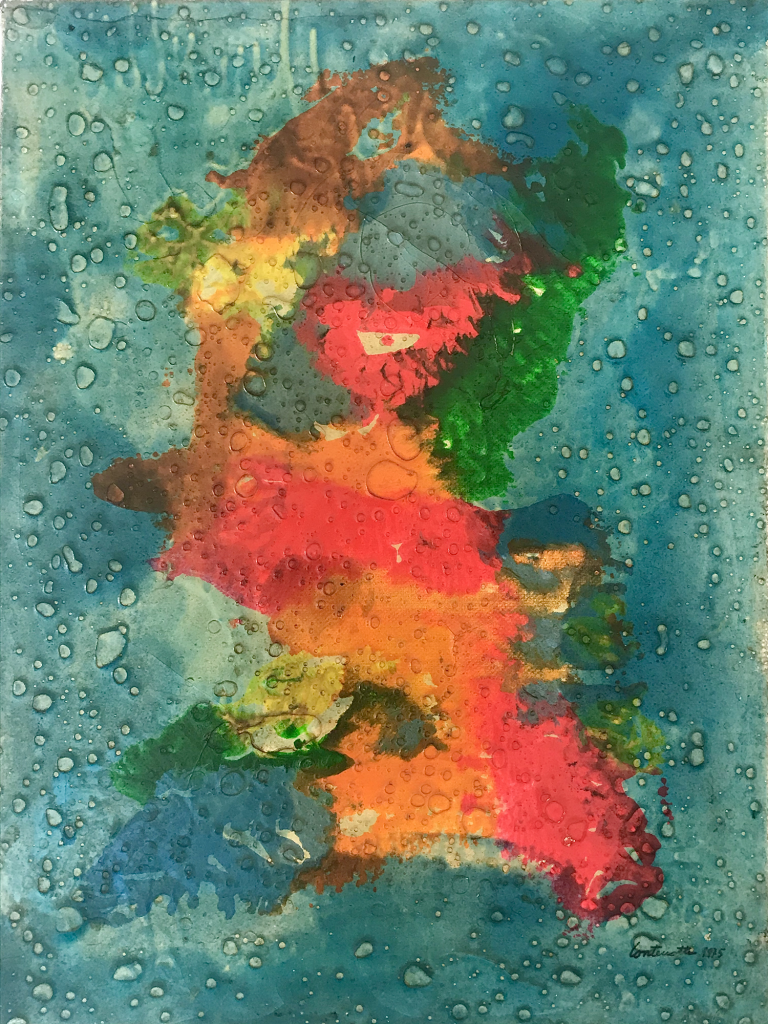
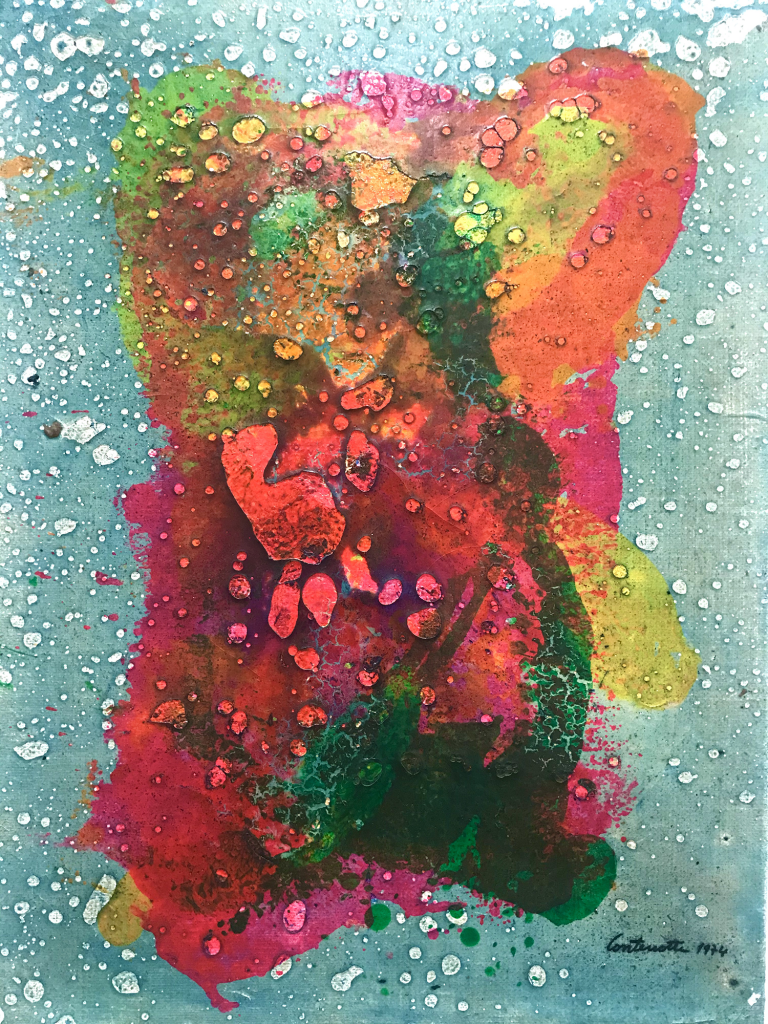
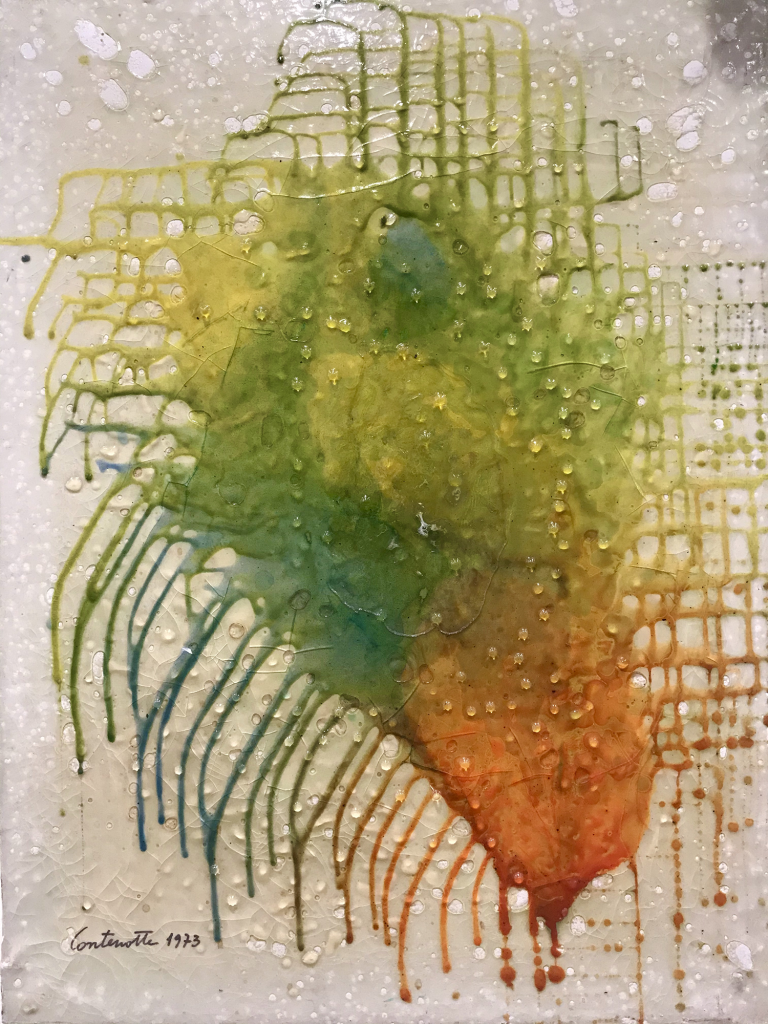
Beginning in the 1960s, dismantling the paradigms of modern painting, Bruno Contenotte—like an alchemist—chose to express himself through unusual synthetic, industrially manufactured materials such as polyesters, expanded polyurethane foams, and silicones. Appropriately treated with fire, special acids, and chemical reagents, these materials were fixed onto resinflex or jute to create science-fiction suggestions and metaphysical images. Thus was born a unique repertoire of planetary and spatial imagery (then unknown and still only imaginable), along with likenesses of mysterious and unexplored places in which the poetic truth the artist possessed of the cosmos emerges.
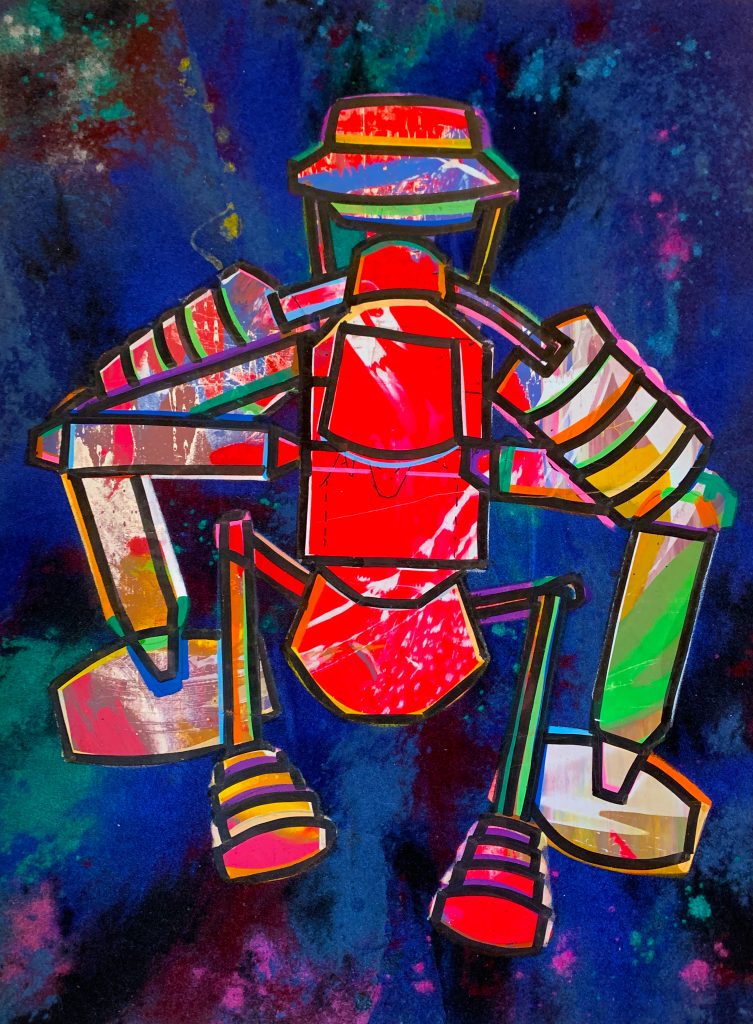
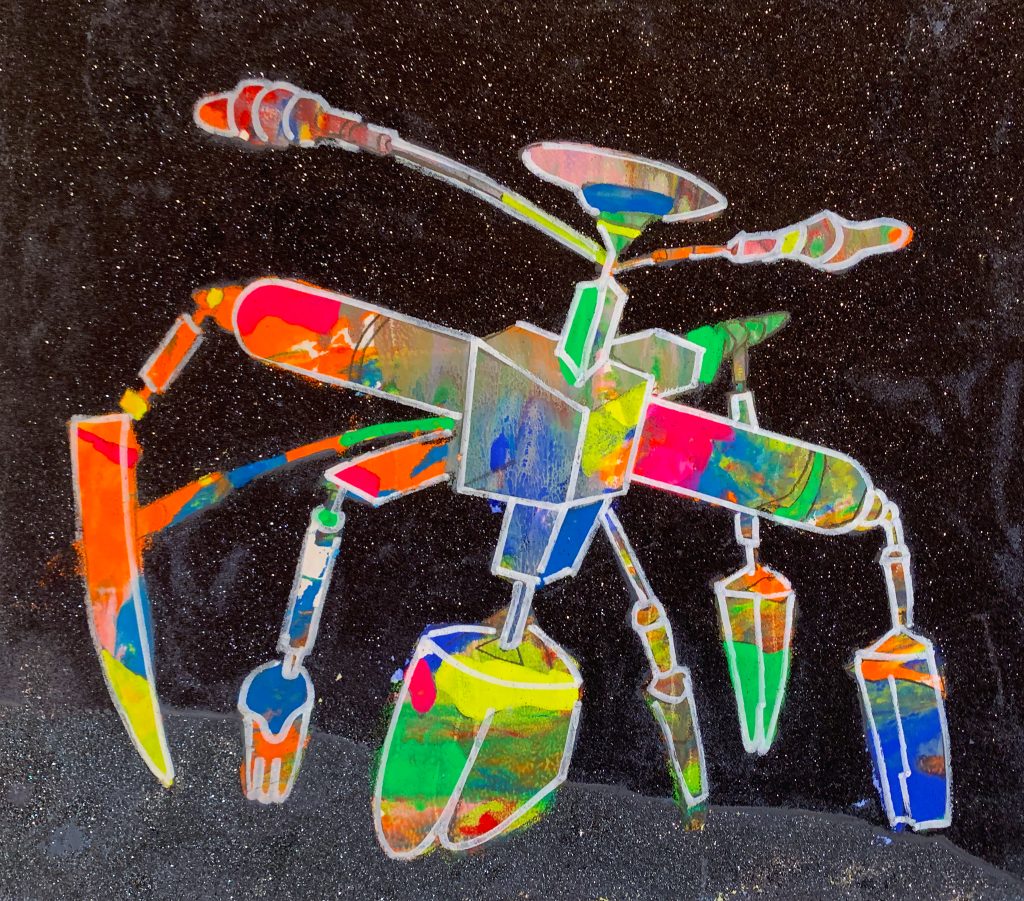
During the same period, while staying in Panarea, Renato Volpini—Neapolitan by birth and trained in Urbino—witnessed an event that would forever obsess his life and artistic research: in 1961 he glimpsed a spacecraft above the sea’s horizon. That sighting indelibly marked his work, already focused on research and movement, which from that moment turned toward an investigation of the Elsewhere and the imagining of those very celestial routes that science was still planning to traverse.
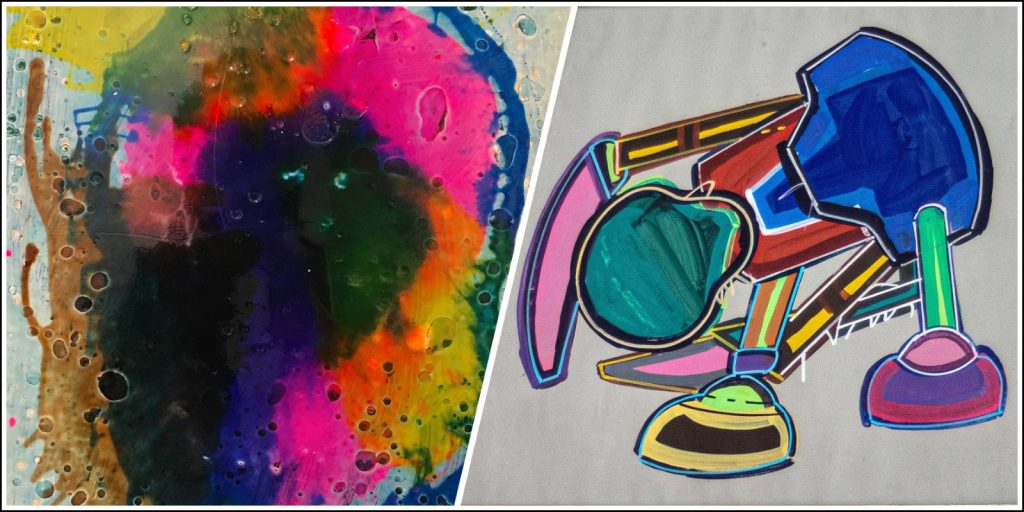
Moving from painting to sculpture, from etchings and aquatints to experimental engraving techniques, from drawing to electronic printing, Volpini—like an architect—assembled polymaterial collages on these supports, generating science-fiction silhouettes in vivid colors that combine the mechanomorphic aspect of spacecraft with the sensitive intelligence of living beings. Thus emerged surreal and dreamlike figurations in which the mechanical element and its spatial devices come to life to the point of personification, incorporating the subjectivity of the collective imagination and the objectivity of the machine.
Bold experimenters and nonconformists, Bruno Contenotte and Renato Volpini resist categorization or confinement within any artistic movement, fluctuating between abstractionism and naturalism.
From the work of both artists emerges a cosmic-spatial vision reworked through an intentionality that is not merely reproductive but innovative and transformative, far removed from experimentation for its own sake. Contenotte’s canvases (also referred to as MQI, or Metaphysical Quantum Images) depict imaginary—and thus science-fiction—metaphysics that avoid references to science or mass media, instead favoring representations of cosmic possibilities and planetary truths still unknown and unexperienceable. Likewise, Renato Volpini’s work, although more visibly influenced in appearance and aesthetics by Pop Art, escapes the simple mythologization and massification of the object in favor of a personal yet intersubjective representation in which artistic creativity and technological experimentation interact to generate a conscious and skillful mechanism.
Taking physical and mechanical phenomena as their starting point, both Contenotte and Volpini incorporate the element of consciousness and perception into their structural vision, overcoming a mechanistic view of reality and suggesting a universe of profound interconnections. The artist, positioning himself as a dynamic observer of physical nature, actively participates in defining reality, creating a field of interplanetary possibilities.
The exhibition will thus feature Volpini’s space machines alongside Contenotte’s cosmic-metaphysical images in a dialogue characterized by heterogeneity of media, dynamism, and chromatic brilliance. Both artists harness the power of color and the human psycho-sensory response to create dynamism and movement: if, on the one hand, Bruno Contenotte’s art is a continuous flow—or its illusionistic representation—as the critic Restany wrote, “It is enough to embrace with a single glance an entire series of images of quantum metaphysics for the film of metamorphosis to recompose itself,” on the other hand, Volpini’s cosmic devices symbolize the flow of becoming, metamorphosis, evoking a gravity-free sailing toward the Elsewhere. These elements and their flowing generate works that extend through time and space.
Accompanying Contenotte’s paintings and Volpini’s collages are two works by Nanda Vigo (1936–2020), queen of light, who always drew inspiration from the cosmos and the universe. With her Cronotopo, the artist creates a symbolic object capable of deforming space and time, stimulating the viewer to reach an “other” environment, a distant and intelligible world, or a higher dimension.
“Cosmological Flow” aims to be an exhibition path that transforms observation into a cosmic journey in which space and time, man and machine, matter and consciousness intertwine in a continuous flow of becoming.
The exhibition will remain open until Friday, July 24, 2026, by appointment (art@allegraravizza.com).
Exhibition conceived in collaboration with Archivio Renato Volpini, Milan, and Archivio Nanda Vigo, Milan.